

Quick answer
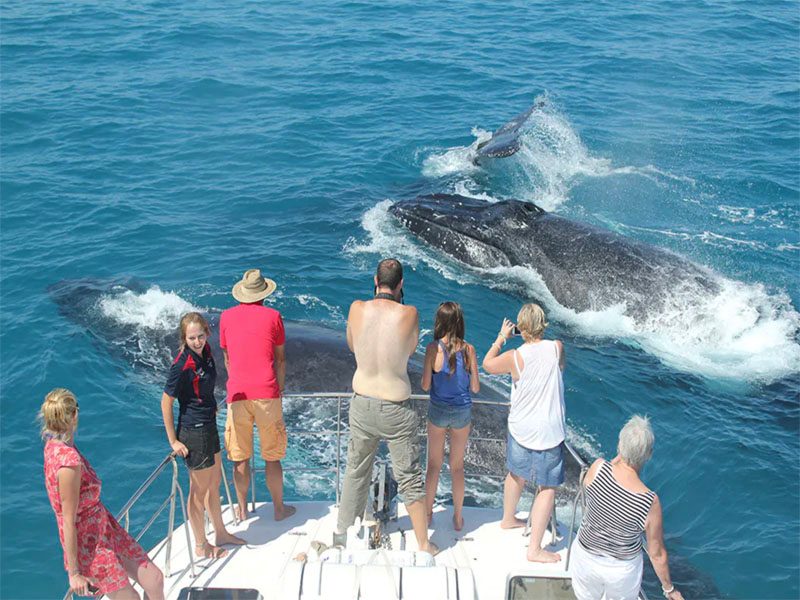
Broome whale watching reviews consistently highlight smaller vessel operators for closer encounters and personalized commentary, while larger catamarans receive praise for stability and onboard amenities during the June-to-October humpback migration. Most tours depart between 1:00 PM and 3:00 PM to combine whale activity with sunset viewing. Visitor satisfaction peaks in August and September when cow-calf pairs linger in Roebuck Bay before heading south. The marine tour industry in Broome maintains high standards across operators, with differences centering on vessel size and viewing style rather than wildlife access.
Humpback whales travel 5,000 kilometers from Antarctic feeding grounds to the Kimberley's warm breeding waters, passing Broome's coastline in a procession that transforms the town into a seasonal whale-watching hub. The migration window is fixed by biology—northbound whales appear in June and July, while southbound pods with newborn calves dominate August through October—but operator quality varies sharply, and visitor reviews provide the clearest picture of what each tour delivers. Broome whale watching reviews reveal a consistent pattern: smaller RIBs and purpose-built wildlife vessels earn higher marks for proximity and maneuverability, allowing captains to reposition quickly when whales breach or tail-slap. Larger catamarans sacrifice close approaches for comfort, with stabilized decks, enclosed cabins, and restroom facilities that matter during three-hour excursions. Families with young children and travelers prone to seasickness favor the catamarans; photographers and marine enthusiasts choose the smaller boats. Both vessel types operate under the same federal approach distances—100 meters for powered vessels, 50 meters if whales initiate contact—so the perceived difference in proximity often comes down to sea-level sightlines versus elevated catamaran decks. Operator commentary quality surfaces repeatedly in feedback. Tours led by marine biologists or certified naturalists receive higher ratings than those with general skippers, particularly when explaining breach behavior, fluke identification, and calf nursing patterns. Several operators now use hydrophones to broadcast whale song during encounters, a feature that dominates positive reviews from first-time whale watchers. The best-reviewed tours also limit passenger numbers—12 to 20 guests versus 60-plus on budget operators—reducing crowding at railings and allowing individualized interaction with guides. Seasonal timing shapes satisfaction more than operator choice. Mid-season reviews from August and early September report the highest whale counts and longest surface interactions, as mother-calf pairs rest in Roebuck Bay before the final push to Antarctica. Early-season tours in June encounter faster-moving northbound whales with fewer surface displays. Late-season October departures risk missing the migration tail end but benefit from calmer seas and discounted rates. Weather patterns matter: the dry season from May through October ensures predictable conditions, but strong afternoon sea breezes in September can create chop that challenges smaller vessels. Visitor reviews consistently note the importance of departure location. Tours leaving from Town Beach or Entrance Point access open water faster than those departing Cable Beach, cutting 20 minutes from transit time and adding whale-viewing minutes. The tradeoff is convenience—Cable Beach operators often include hotel transfers, while town-based charters require independent transport. Free entry to viewing points like Gantheaume Point allows land-based whale watching as a supplement or alternative to boat tours, though reviews emphasize that offshore encounters deliver far superior sightings and photographic opportunities.
“Mid-season tours in August and early September report the highest whale counts and longest surface interactions, as mother-calf pairs rest in Roebuck Bay before the final push to Antarctica.”
Seasonal Timing for Broome Whale Watching Reviews
The optimal window for whale watching in Broome occurs from late June to September when Humpback whales migrate through local waters. Afternoon departures are preferred to align sightings with the region's characteristic sunset conditions.
Late June to July
Moderate crowdsMild, 20°C to 28°C
The migration season begins with active surface behavior. Sightings are frequent as pods travel through Kimberley waters.
August to September
Higher crowdsWarm, 22°C to 31°C
Peak period for sightings as mothers and calves frequent the area. Afternoon tours offer visibility for whale activity and sunset views.
Afternoon departures
VariableConditions favor sunset views
Most tours depart in the afternoon to combine whale watching with sunset views. This timing aligns with the best arrival window of 13:00–18:00.
Verdict: The best time to visit is during the peak months of August and September, specifically booking afternoon departures.
Operating Hours for Broome Whale Watching Reviews
Broome whale watching operators maintain daily availability to accommodate visitor schedules throughout the season.
| Monday | 00:00–23:59 | |
|---|---|---|
| Tuesday | 00:00–23:59 | |
| Wednesday | 00:00–23:59 | |
| Thursday | 00:00–23:59 | |
| Friday | 00:00–23:59 | |
| Saturday | 00:00–23:59 | |
| Sunday | 00:00–23:59 |
Cost Expectations for Broome Whale Watching Reviews
Admission to the coastal areas used for whale watching observation points is free. Actual whale watching experiences require a paid tour booking.
Public access to the coastline is free, while whale watching tours vary in price depending on the selected operator and package.
Getting to Departure Points for Broome Whale Watching Reviews
Whale watching tours in Broome primarily depart from Gantheaume Point or Entrance Point. Both locations are accessible by road from the Broome town center.
Follow Gantheaume Point Road to the main car park
Direct service from Broome accommodation to the boat ramp
Broome Explorer Bus to nearby stop
Preparation Checklist for Broome Whale Watching Reviews
Prepare for a comfortable and rewarding whale watching experience with these essentials.
-
Book your tour in advance — Operators fill quickly during the June to October humpback migration season.
-
Bring sun protection and a hat — Broome's tropical sun is intense, even on afternoon departures.
-
Pack a camera with zoom capability — Humpback breaches and tail slaps occur at distance from the boat.
-
Wear layered clothing and closed shoes — Ocean wind creates a wind chill once vessels reach open water.
-
Carry your booking confirmation — Printed or digital proof ensures smooth check-in at the departure point.
-
Take motion sickness medication if needed — Swells can be moderate to rough beyond the sheltered Cable Beach area.
-
Arrive 15 minutes before departure — Operators conduct safety briefings and allocate seating before leaving the dock.
Check availability
Common Questions About Broome Whale Watching Reviews
Everything you need to know about broome whale watching reviews